What the building carries
Events at St Andrews Hall in Norwich: A Guide to What the Halls Carry
The halls have never specialised. A guide to the kinds of event that fill the year, and where current listings actually live.
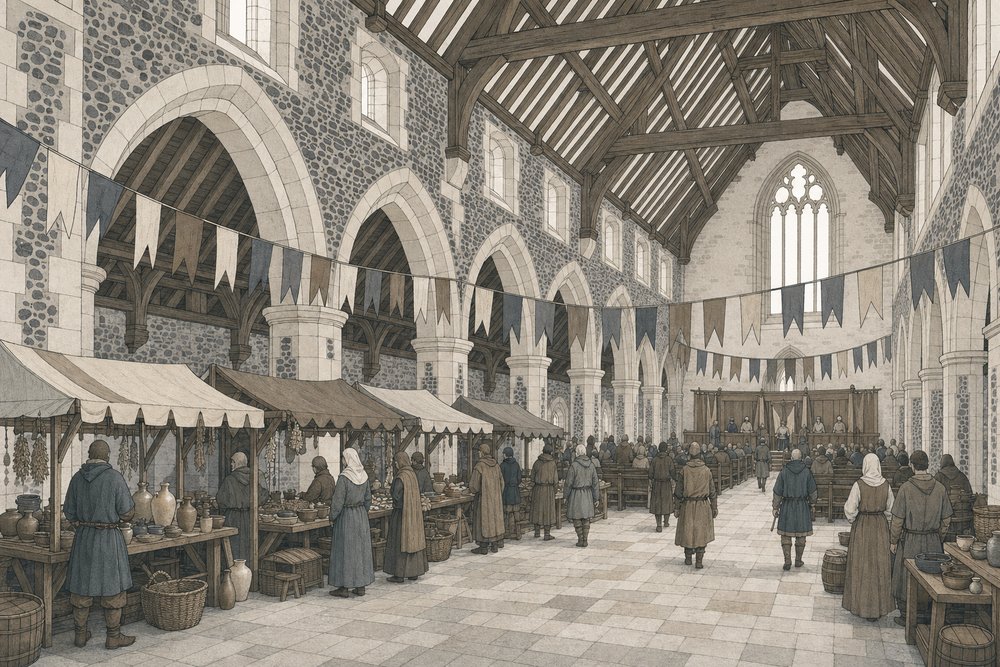
The most accurate thing to say about the programme here is that there isn’t a theme. A building that has served as concert hall, corn exchange, assize court, banqueting room and beer festival floor has never had the luxury of specialising, and the modern calendar reflects that history more directly than any statement of policy would.
Where current listings live
Norwich City Council owns and operates the complex as The Halls, and it publishes the programme itself. That listing is the authoritative source for what is on, when, and how to get in, and it is maintained in a way that no summary compiled elsewhere can match. Ticketing routes differ by event, and only the operator’s page tracks which applies.
This guide deliberately does not duplicate it. What follows describes the kinds of thing the building carries and how they use the rooms, which is the part that stays true between seasons. Describing the kinds of event the rooms take, and how each uses them, is the part that stays true from one season to the next.
Music
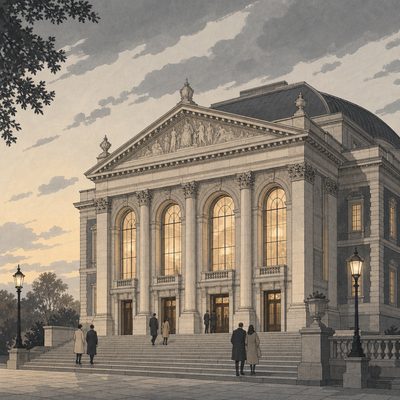
Concerts remain the most visible use. The resident Norwich Philharmonic Society has performed here since the Victorian period, the Norfolk and Norwich Festival brings touring orchestras including the Philharmonia, and the building’s rock and pop history runs from Tangerine Dream in 1975 through The Cure in 1981 and onward through four more decades of touring.
Fairs and markets
The collectors’ trade is the longest-running commercial fixture, and the antiques and collectors’ fair is the best known of them. Record fairs, book fairs and craft markets have worked the same floors over the years, usually taking the cloister walk and spilling into the nave whenever they need the room.
Talks, ceremonies and civic use
Lectures and talks suit Blackfriars Hall, where a single voice carries without reinforcement. Graduation congregations, civic functions and prize days have used the nave for generations, and heritage open days give access to the building for its own sake, not as the setting for something else. Civic ceremony has used the building continuously since the sixteenth century.
Private hire
A significant share of the calendar is not public at all. Weddings, conferences, banquets and corporate events are hired and not programmed, which means a date in the diary may be a private occasion rather than something to buy a ticket for, and the hire guide covers that side of the calendar.
After the restoration
The recent investment was presented as a new chapter for the venue and not a repair job, and the practical effects show in the programme. Upgraded technical facilities widen what can be staged, improved access widens who can attend, and better social areas change how an audience uses the building between the doors opening and the event starting.
Current listings run well into the following year, which is itself a signal: a venue programming twelve to eighteen months ahead is operating as a working cultural space instead of ticking over. A venue programming that far ahead is operating as a working cultural space with a season to fill.
Planning a visit around an event
Most practical questions — parking, step-free routes, where the entrances actually are on each street frontage, how early to arrive — are the same whatever is on, and they are gathered on the visiting page. For seating questions specific to a concert layout, the capacity notes explain how the rooms change shape.
Common questions
Where can I find out what is on at the halls?
Norwich City Council publishes the current programme for the venue, since it owns and operates the complex as The Halls. That listing is the authoritative source for dates, times and tickets, and it is kept current in a way no third-party summary can be. A summary compiled elsewhere is always one revision behind.
What sort of events are held there?
A wide mixture: concerts of every kind, talks and lectures, antiques and collectors' fairs, craft and record markets, exhibitions, graduation ceremonies, civic functions, conferences and heritage open days. The variety is the building's defining characteristic and not an accident of programming. A calendar this mixed is the direct legacy of a city with very few large rooms.
Are events open to the public?
Many are, and some are private hires that are not. The halls work as a hired venue as well as a programmed one, so a given date may be a public concert, a private wedding or a trade event. The published programme distinguishes between them, and the two can fall on consecutive days.
Is there a charge to look around the building?
The complex is a working event venue and not a museum with an admission desk. Access usually comes through attending something, though heritage open days and guided tours have featured in the programme and are the reliable way to see the building for its own sake. Those days aside, the interior is seen by people who came for something else.
Has the programme changed since the restoration?
The recent investment and restoration were presented explicitly as opening a new chapter for the venue, with upgraded technical facilities, better access and improved social areas. The programme has broadened accordingly, and current listings run well into the following year. Programming that far out also tells suppliers the venue intends to keep the diary full.
Do the halls host regular weekly events?
Recurring fixtures have long been part of the pattern, the collectors' and antiques trade being the most established of them. Because market and fair schedules change, anyone planning around a regular event should confirm the current arrangement instead of rely on a remembered pattern. Organisers change, and with them the day of the week a market has always run on.