The complex in summary
About The Halls in Norwich: St Andrews and Blackfriars Under One Roof
What the building is, who runs it, and how the parts fit together — the short version, with the detail linked.
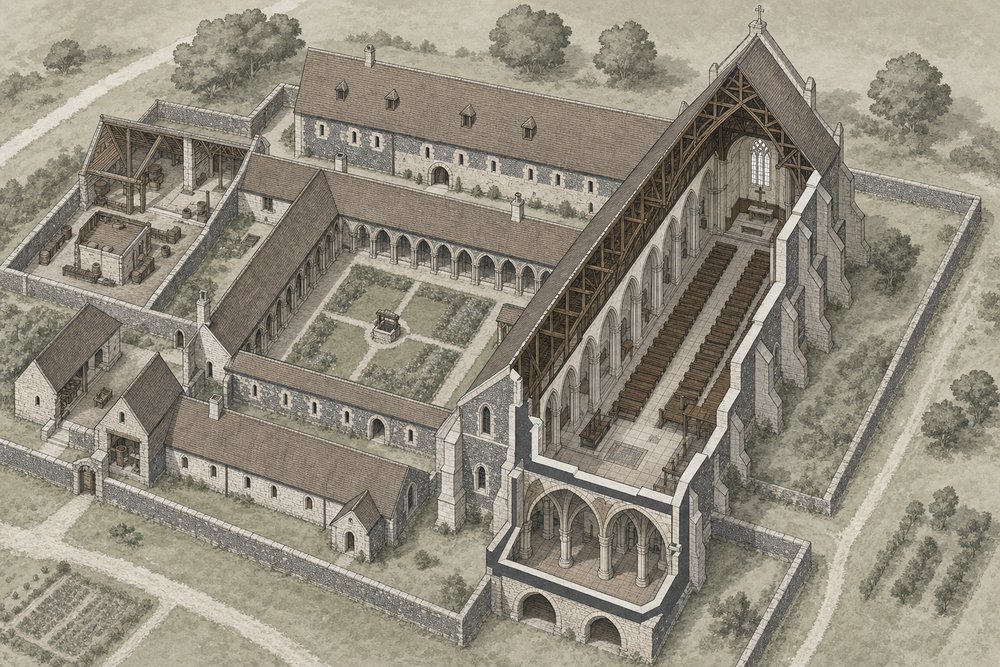
The short version: this is the church of a Dominican friary, rebuilt in the fifteenth century, bought by the city of Norwich in 1538, and in continuous public use ever since. It is the most complete surviving friary complex in England, and it works today as a venue, not as a monument.
The building in outline
One church, two halls. St Andrews Hall is the nave — the large western room with the arch-braced hammerbeam roof, taking over 750 seated. Blackfriars Hall is the chancel beyond the crossing, oak-panelled and taking around 250. Both are licensed rooms in regular use. Neither is roped off or kept for display; both are in regular working use.
Two smaller spaces complete the complex. The cloister walk survives to the north and carries fairs, markets and receptions. The crypt is the undercroft beneath the east end, the oldest interior on the site and the smallest room hired out. Between them they take the events for which the two main halls would be far too large.
Why there are two names
The two halves spent long periods being run as separate places, which is why one building carries two names. The nave took the civic assemblies and feasts; the chancel served at various times as a parish church and later as a meeting room, acquiring the panelling and the domestic scale it still has.
That divided history explains why the rooms feel so unlike each other despite sharing a wall and a roofline, and the history of the complex traces how the separation came about. A visitor moving from one into the other is crossing five centuries of separate decisions, not merely changing rooms.
Who runs it
Norwich City Council owns the complex and operates it as The Halls. The council programmes the public events, handles hire enquiries, sets the terms and publishes the listings. Anyone wanting a date, a ticket or a quotation deals with the council’s venue team. Nothing here should be read as confirmation that a room is free on a given date.
That has been the arrangement, in one form or another, since the corporation bought the friary from the crown in 1538. The city has held this building for longer than the friars did. Five centuries of municipal ownership have left more mark on the interior than three of Dominican use.
The recent restoration
A substantial programme of investment and restoration has been completed, presented by the council as a new chapter for the venue and not a repair. The work brought upgraded technical infrastructure, improved access, better social areas and conservation of historic detail. Conservation of the historic fabric was carried out inside the same programme as the practical work.
The practical effect on the programme is visible: current listings run well into the following year, and the range of what can be staged has widened. The events guide covers how the calendar works. A venue booking that far ahead is operating as a working cultural space and not ticking over.
What this site is
A reference guide to the building. It covers the history, the performance record, the rooms and their capacities, the hire options, the civic portrait collection and the practical business of getting there. Each section is written to stand on its own, so there is no need to read them in order.
Programming, ticketing and bookings are not handled here. For dates and availability the council’s own listing is the authoritative source, and it is linked from the footer of every page on this site. That division is deliberate: a guide that invented availability would be worse than no guide at all.
Common questions
What exactly is the complex?
The church of a Dominican friary, rebuilt in the fifteenth century after a fire, bought by the city in 1538 and used for public purposes ever since. St Andrews Hall is the nave and Blackfriars Hall the chancel, with the cloister walk and the crypt completing the four hireable spaces.
Who owns and runs it?
Norwich City Council, which programmes the public events and lets the rooms under the name The Halls. All hire enquiries, ticketing and access arrangements go through the council's venue team, which publishes its own current terms and listings. The arrangement is the direct descendant of the purchase the corporation made in 1538.
Why are there two names for one building?
Because the two halves have been run separately for long stretches of their history. St Andrews Hall took the assemblies and feasts while Blackfriars Hall served at times as a parish church and later as a meeting room, and each acquired its own name and character. Each acquired its own fittings, its own audiences and eventually its own name.
Has the building been restored recently?
Yes. A substantial programme of investment and restoration has been completed, described by the council as opening a new chapter for the venue, and it brought upgraded technical facilities, improved access, better social areas and conservation work on the historic detail. Conservation of the historic detail ran alongside the practical upgrades, not after them.
Is the building listed?
It carries the highest grade of statutory protection, which is what would be expected of the most complete surviving friary complex in England. That status shapes everything about how it can be used, from fixings and rigging to the routes services are allowed to take. Consent is needed for work that a less protected building could simply get on with.
What is this site?
A reference guide to the building: its history, its rooms, its performance record and the practical detail a visitor or hirer needs. Programming, ticketing and bookings are handled by the council, and its listing is the authoritative source for current dates. Nothing on this site should be treated as confirmation that a room is free on a given date.